Shop, Barn & Outbuilding Roofing in Tooele County
When the National Weather Service writes up storm damage in this county, sheds and outbuildings turn up in the reports about as often as houses do. That tracks with the building stock out here. Between Grantsville, Erda, Stockton, Rush Valley, and Skull Valley there are a great many shops, barns, detached garages, equipment sheds, and hay covers, most of them sitting on open ground with nothing upwind to slow anything down. They take the weather first and they take it hardest.
They also get treated as an afterthought. Too small to interest a commercial roofer, not a house, and awkward to schedule around a residential route. Tooele Roofing Co quotes them properly, and we quote every structure on a property in a single visit with an itemized number per building and a prioritized list, so you can plan across a couple of seasons instead of reacting to whichever roof leaks first.
Get Your Free Property-Wide Assessment
These Roofs Leak at the Screws, Not the Seams
If you own an exposed-fastener metal building, this is the most useful thing on the page.
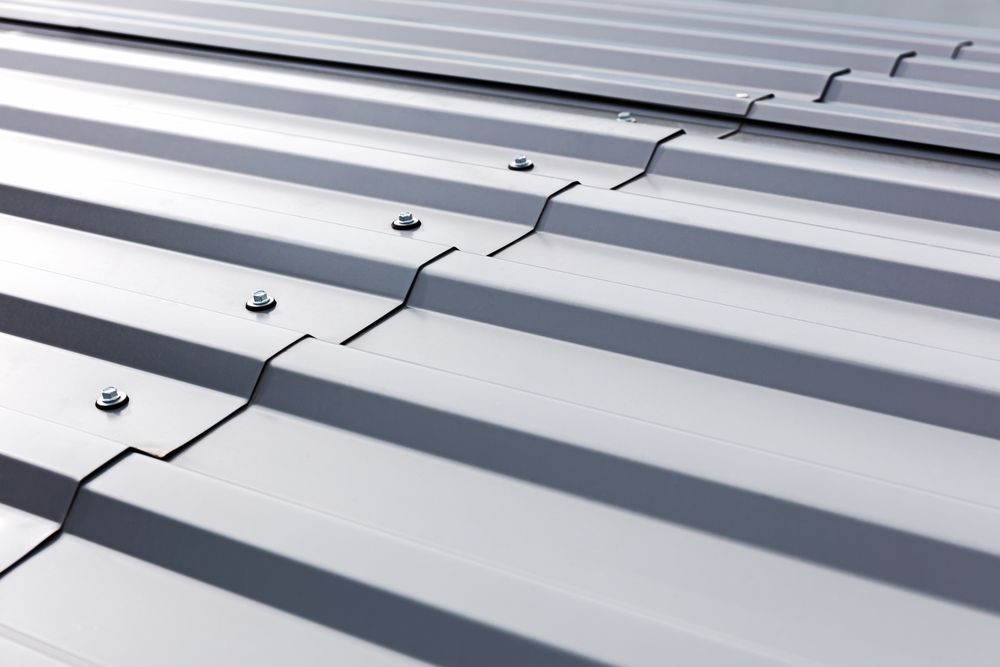
Panel roofs are fastened with screws driven through the face of the panel, each one sealed by a small neoprene washer under the head. That washer is the waterproofing. It is also the shortest-lived component on the entire roof.
What happens to it
Sunlight and temperature cycling dry the neoprene out, it shrinks and hardens, and it stops compressing against the panel. Meanwhile the panel itself expands and contracts with every temperature swing, working against the shank of the screw and slowly backing it out of the purlin. Somewhere around the fifteen to twenty year mark, and sooner on high-exposure buildings, you have a roof full of fasteners that are no longer sealing.
What that looks like from inside
Small drips scattered around the building with no pattern, usually appearing during driving rain and blowing snow rather than a steady shower. Rust streaks running down from screw heads on the inside face. Damp purlins. People often assume the panels have failed, and go pricing a whole new roof.
Why that assumption is expensive.
The panels are frequently fine. Steel panel roofs commonly outlast their fasteners by decades. A fastener and washer service costs a fraction of a re-roof and buys years, and it is the single most common thing we get called out for on these buildings.
What the service actually involves
Oversized replacement fasteners driven into fresh purlin bite rather than back into the same worn hole, new sealing washers throughout, ridge and eave closures refreshed while we are up there, and any panel damage addressed at the same time. One visit, itemized per structure.
Outbuildings Take the Wind Harder Than Your House
There are reasons these buildings show up in damage reports out of proportion to their number.
They stand in the open. A house in a subdivision has other houses, fences, and mature trees breaking up the wind. A shop on five acres in Erda has none of that.
They were often built lighter. Plenty of these structures are kit buildings or owner-erected, and the edge details that matter most in wind, meaning eave and rake trim, closures, and fastener spacing at the perimeter, are exactly the details most likely to have been done quickly.
Their edges are their weakness. Wind generates lift concentrated at perimeters and corners. On a panel roof the eave and rake trim is what holds that edge down, and undersized or too-few fasteners in the trim mean the trim peels first and then the panels follow.
Ridge closures are frequently missing entirely. Panel ribs create open channels at the ridge and eave, and closures are what block them. When they are absent or degraded, wind pushes dry snow up under the ribs into the building, where it melts and looks exactly like a leak in a roof that has no holes in it.
Nobody is inside them in February. A house tells you it has a problem, because someone is standing under the ceiling stain. A hay shed does not tell anyone anything until spring.
Agricultural & Barn Roofing Services
Tooele County agriculture does not look like Cache Valley's, and the buildings reflect that. The 2022 Census of Agriculture counted 558 farms working roughly 312,000 acres here, with the base centered on sod, sheep, and equine rather than dairy. Land in farms runs about 92 percent pasture against 6 percent cropland, and hay is the principal crop. Most telling for what we actually get called out to: about half of the county's farms sell under $2,500 a year and roughly four in ten sit on nine acres or less.
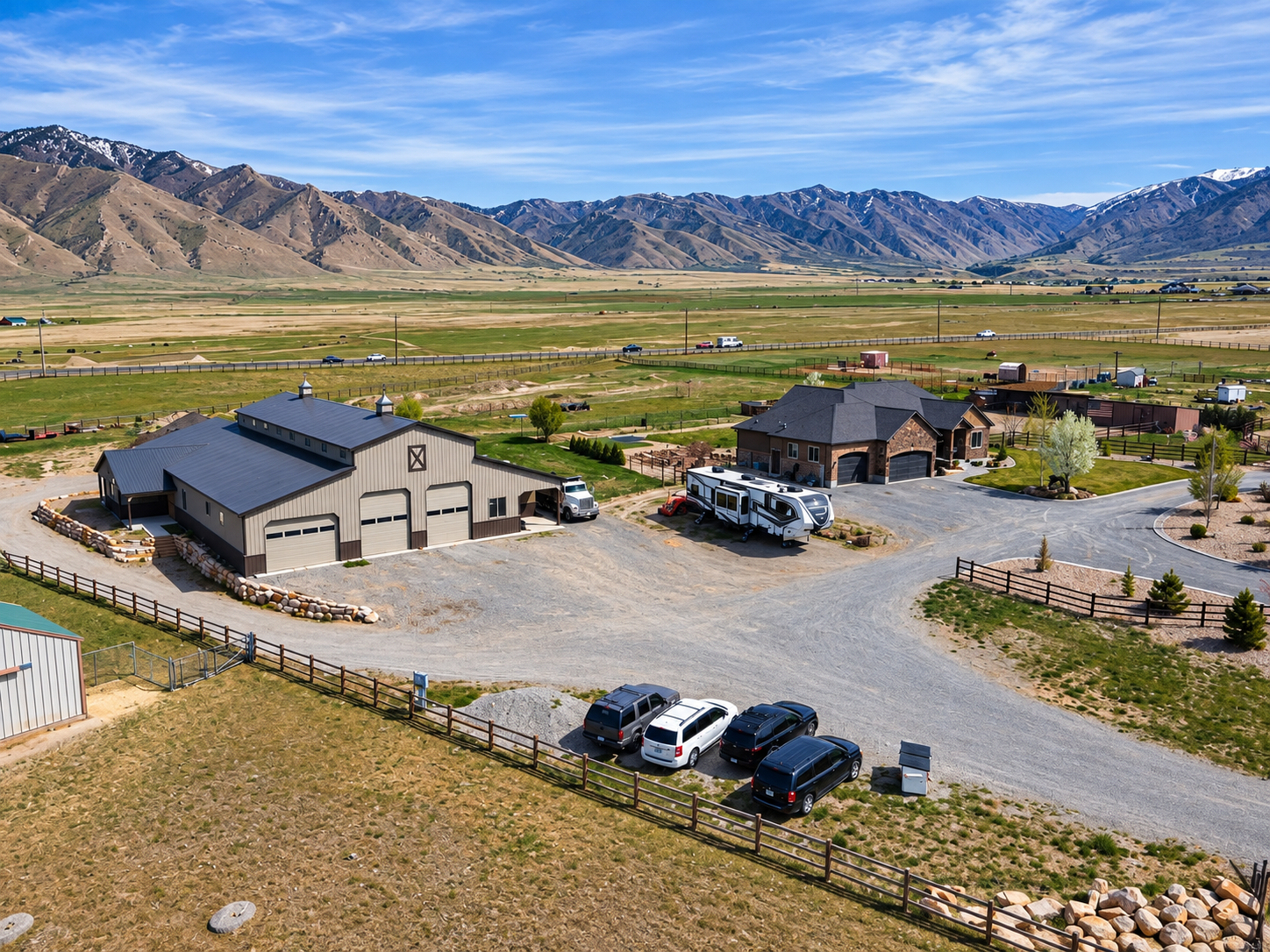
That means the typical building we roof out here belongs to a horse property, a hobby farm, or an acreage home with a shop, not to a commercial operation. We quote them accordingly.
Horse Property Roofing
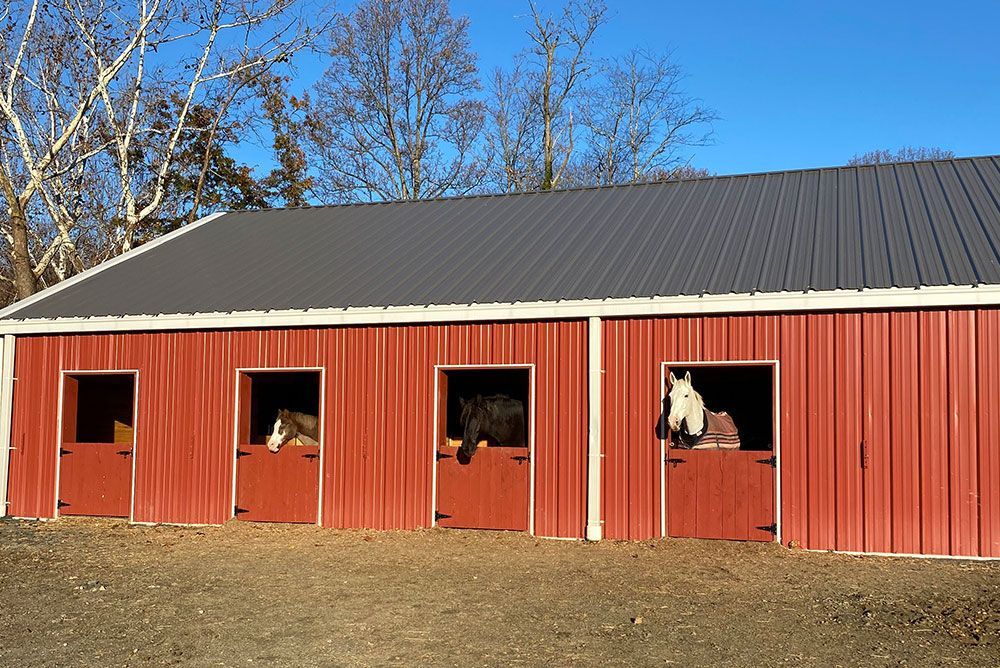
Barns, loafing sheds, run-ins, tack and feed rooms, and riding arenas. Equine is one of this county's largest agricultural sectors and the buildings that come with it are chronically underserved, particularly arenas, where a large clear-span roof over an open structure catches serious uplift and almost nobody quotes them. We handle panel replacement, closure and edge work, and full re-roofs, and we assess condensation before it ruins the tack room. At a glance: barns, loafing sheds, run-ins, tack rooms, arenas · clear-span uplift detailing · condensation assessment included · quoted per structure
Hay Covers, Machine Sheds & Equipment Storage
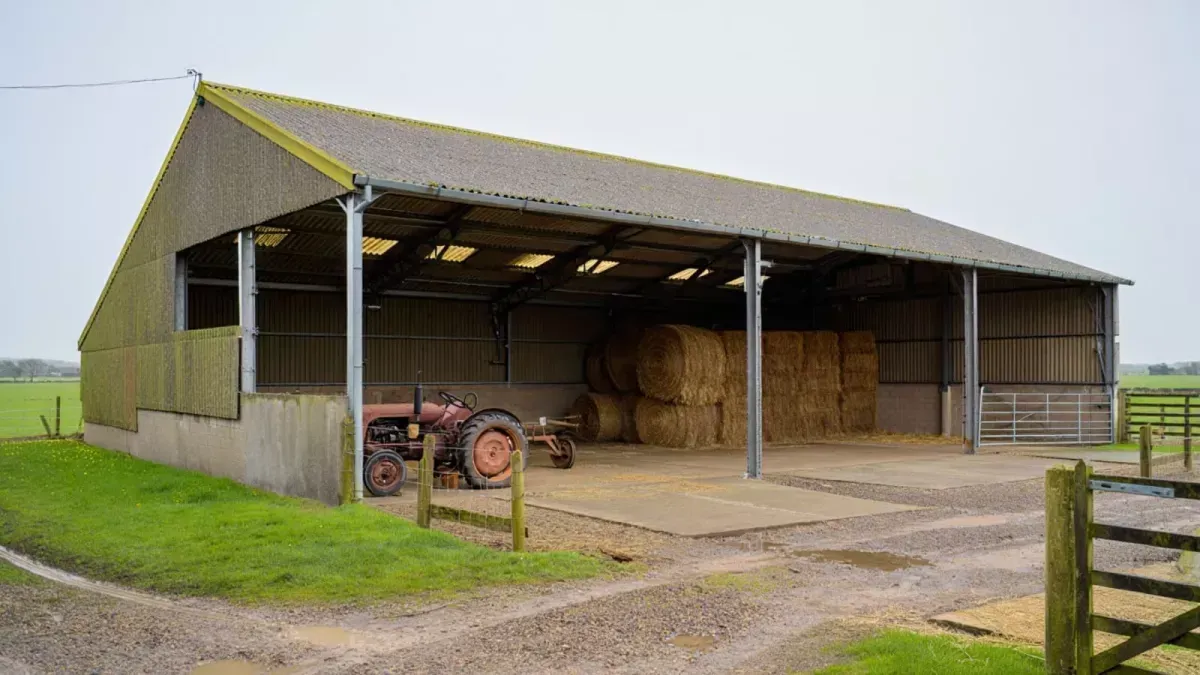
Hay is the county's main crop and wet hay is worse than no roof at all. We repair and replace covers and storage buildings, with particular attention to eave and ridge closures, because wind-driven snow entering under panel ribs soaks stored hay and equipment without a single hole in the roof. Sod and equipment operations get the same treatment on machine sheds and shop buildings. At a glance: hay covers, machine sheds, equipment and implement storage · closure and ridge detailing · leak versus condensation diagnosed before quoting · scheduled around your season
Metal Building & Pole Barn Roofing
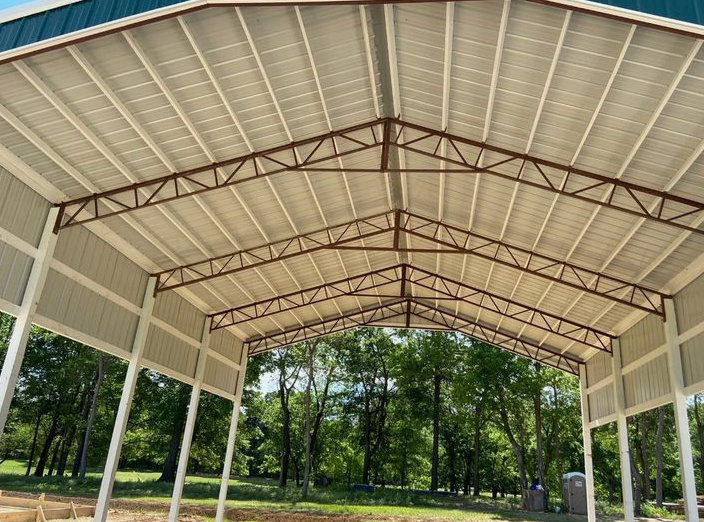
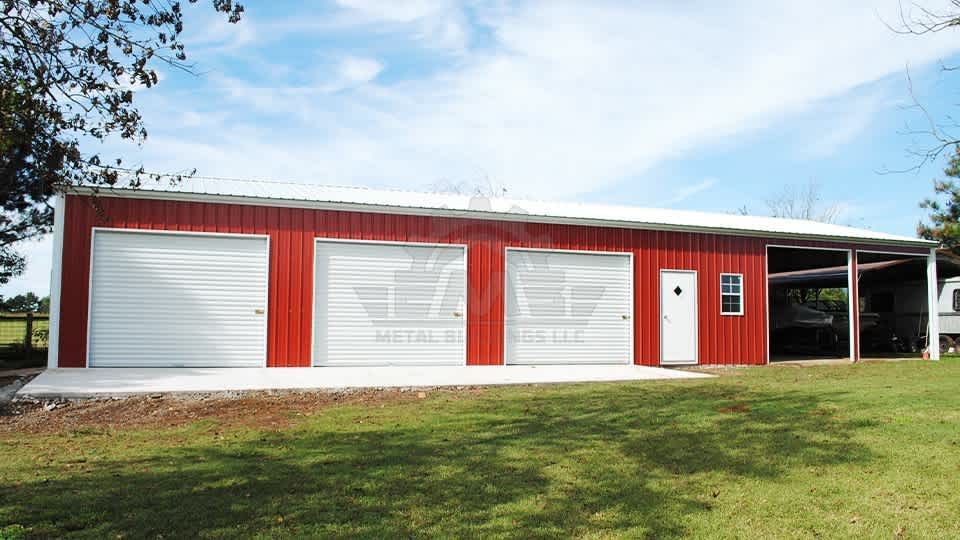
New panel roofs and re-roofs on post-frame and steel-frame buildings, including the details that get skipped on owner-erected and kit structures: fastener length and gasket seating into fresh purlin bite, eave and ridge closures that keep wind-driven snow out, and sidewall flashing at every addition and lean-to. On a wind-exposed lot these edges are what decides whether the roof lasts twelve years or thirty. At a glance: post-frame and steel-frame · new installs and re-roofs · fastener length and purlin bite verified, not assumed · eave and ridge closures on every run · edge and trim re-detailing
On scheduling. Most properties out here are not running a commercial calendar, so we book around you rather than assuming. If you do have a season that matters, meaning lambing, cutting, or an arena that has to stay usable, say so on the first call and we will plan the work around it.
What We Do on These Buildings
Fastener and Washer Service
The core work. Full re-screw with oversized fasteners and new washers, closures refreshed, per structure pricing.

Panel Repair and Replacement
Individual panels damaged by wind, debris, or impact, replaced and matched. Storm damage on outbuildings is covered on our storm damage page.

Full Metal Re-Roofs
When panels genuinely are finished, exposed-fastener panel or standing seam depending on the building and the budget. System comparison on our metal roofing page.

Condensation Assessment
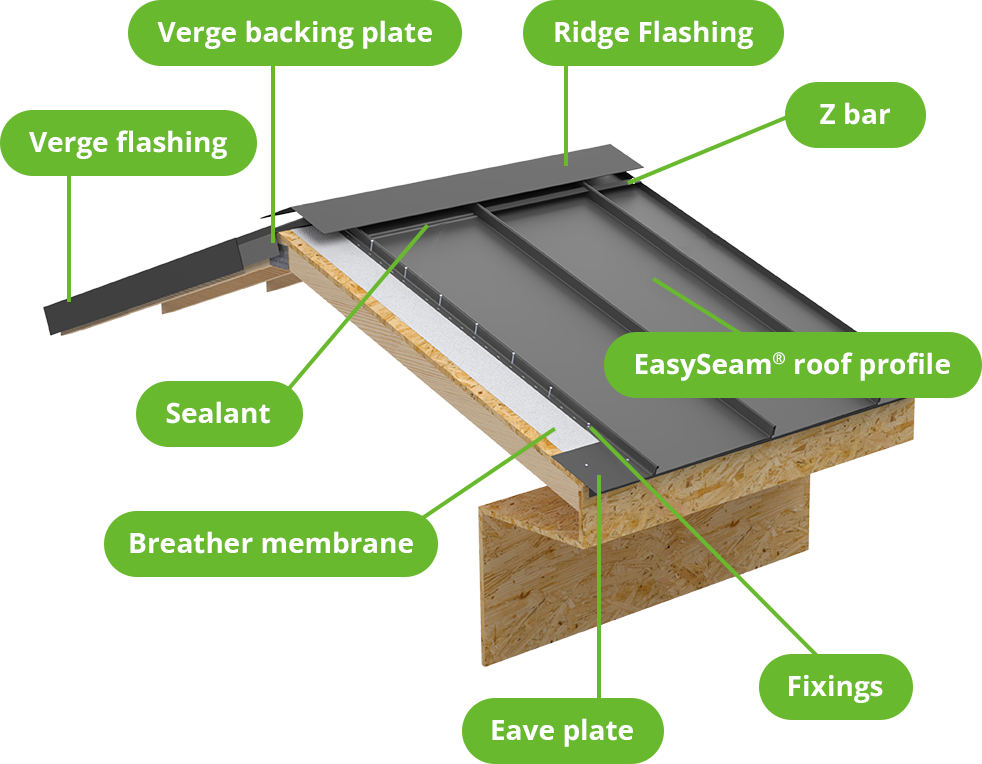
See the section below. It is misdiagnosed constantly.
Snow Load and Drift Checks
See the section below. It is misdiagnosed constantly.
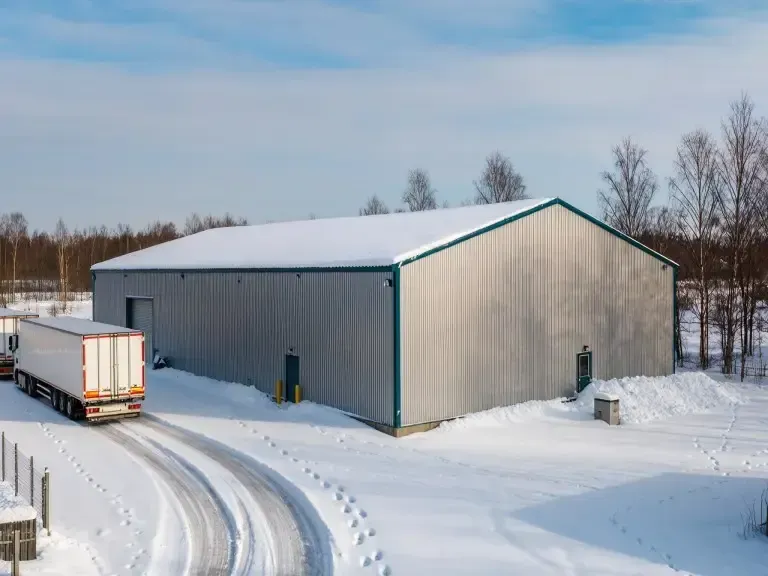
Snow load and drift checks. Long-span buildings deflect quietly and fail fast. We check them as part of any property visit, and we will tell you when the honest answer is that you need an engineer rather than a roofer.
It Rains Inside My Shop and the Roof Has No Leaks
This is the other diagnosis that saves people a lot of money, and it comes up constantly on metal buildings.
If water drips inside during cold weather but the roof is intact and it stays dry in an actual rainstorm, what you almost certainly have is condensation rather than a leak. Warm moist air inside the building rises, meets the cold underside of the steel panel, and gives up its moisture on that surface. When enough collects, it drips. Sources of the moisture include stored hay, livestock, a vehicle brought in wet, a concrete floor curing or wicking, and any unvented heater.
Why more insulation alone often makes it worse. Insulation without a vapor control layer and without ventilation can move the condensing surface rather than eliminate it, and can trap moisture where you cannot see it.
What actually addresses it: an anti-condensation membrane or coating on the panel underside, a properly vented assembly that lets moist air leave the building, controlling the moisture source itself, or some combination. The right answer depends on what the building is used for, which is why we ask before recommending.
Telling this apart from a real leak is straightforward once you know to look: leaks follow rain, condensation follows cold. If it drips on a clear January morning, it is condensation.
One More Thing Worth Knowing About Insurance

Detached structures are generally covered under a separate section of a homeowner policy with its own limit, commonly calculated as a percentage of the coverage on the house. Two consequences that cost people money in this county: that limit may not be enough to re-roof a large shop, particularly if the building went up after the policy was written, and adjusters frequently never walk out to the outbuildings at all, so the damage never enters the claim file.
We photograph every structure on the property as a matter of course, which gives you something to hand an adjuster. The fuller explanation is on our storm damage page.
What This Work Costs in Tooele County
Typical Tooele County market ranges; estimates only. Multi-structure properties get an itemized number per building rather than one lump figure, so you can decide what happens this year and what waits.
Pricing moves with square footage, height, roof pitch, panel condition, and access. Multi-structure properties get an itemized number per building rather than one lump figure, so you can decide what happens this year and what waits.
"Four buildings, four numbers. You decide which ones happen this year."
Our Roofing Process
01
One Visit, Every Building
We walk the whole property rather than the one structure you called about, because the answer is usually different for each one and you should only have to schedule this once.
02
Per-Structure Findings
Photographed condition report for each building, including fastener condition, closures, edge detailing, panel condition, and any deflection worth watching.
03
The Number, in Writing
An itemized estimate per structure with a prioritized order, so you can see what genuinely needs doing now and what can reasonably wait a season or two.
04
The Work, Scheduled Around You
Farm and shop work planned around your operations rather than ours, including access for equipment and whatever is stored inside.
Why Call Us for Outbuildings
We quote them at all
Most companies treat these buildings as too small to bother with or too odd to schedule. They are core work for us.
We check fasteners before we quote panels
A re-screw is a fraction of a re-roof, and recommending the expensive option on a roof that does not need it is a good way to never be called again.
One visit for the whole property
House, shop, barn, shed, itemized separately and prioritized.
We know the difference between a leak and condensation
And we will tell you which one you have before quoting anything.
Outbuilding Roofing FAQs
One Visit, Every Roof on the Place
Free property-wide assessment with a photographed condition report and an itemized number for each structure, prioritized so you can plan rather than react.
Or Call: 385-527-3313