Storm & Wind Damage Roof Repair in Tooele, Utah
Tooele Valley does not get weather that sneaks up on people. In August 2026 the National Weather Service confirmed an EF-1 tornado in Tooele County, and the same system produced a supercell with gusts above 90 miles per hour that peeled back the corner of a fire station's metal roof and stripped material off homes, sheds, and outbuildings. Warnings that month cited gusts measured at 70 miles per hour and hail at two inches, across a list of communities that reads like a county map: Tooele, Grantsville, Stansbury Park, Erda, Lake Point, Stockton, Rush Valley, Ophir, and Skull Valley. Everyone here remembers those nights. The problem is that roofs frequently do not show what happened on them.
Tooele Roofing Co does the documenting. Dated photographs tied to specific slopes, a written scope, and a clear answer on the question most contractors avoid: whether what we found is storm damage your policy covers or ordinary aging that it does not. We will work through the deductible arithmetic with you before you file anything, because a claim that should not have been filed costs you money and stays on your record afterward.
Get Your Free Storm Damage Inspection
The First Two Days After a Storm
List of Services
-
1. Hazards firstList Item 1
Downed lines, water anywhere near an electrical panel or fixture, limbs hung up in trees or resting on the roof. Stay off the roof, and stay off ladders entirely if the wind has not settled.
-
2. Contain water insideList Item 2
Buckets, towels, plastic over anything that matters, and a small hole through the center of a bulging ceiling so it drains rather than collapses. Cut power to wet fixtures. Fuller guidance on our our roof repair page.
-
3. Photograph today, not next weekList Item 3
Wide shots of the house from all four sides, then close ups. Include the ground: shingle pieces in the yard, granules in the driveway, dented gutters, cracked vent covers, debris against the fence. Then every interior stain. Your phone timestamps all of it, which is the entire point.
-
4. Write down the date and the approximate timeList Item 4
Not "a couple weeks ago." Claims tie damage to a specific weather event on a specific date, and that date gets checked against the record.
-
5. Walk your whole property, not just the house
The shop, the detached garage, the barn, the shed. Damage out there is frequently worse and it is covered under a different part of your policy. More on that below.
-
6. Keep the evidence
Blown shingles in the yard, a dented gutter section, a broken vent cap. Bag it and set it aside until an adjuster has been out.
-
7. Make reasonable temporary repairs and save every receipt
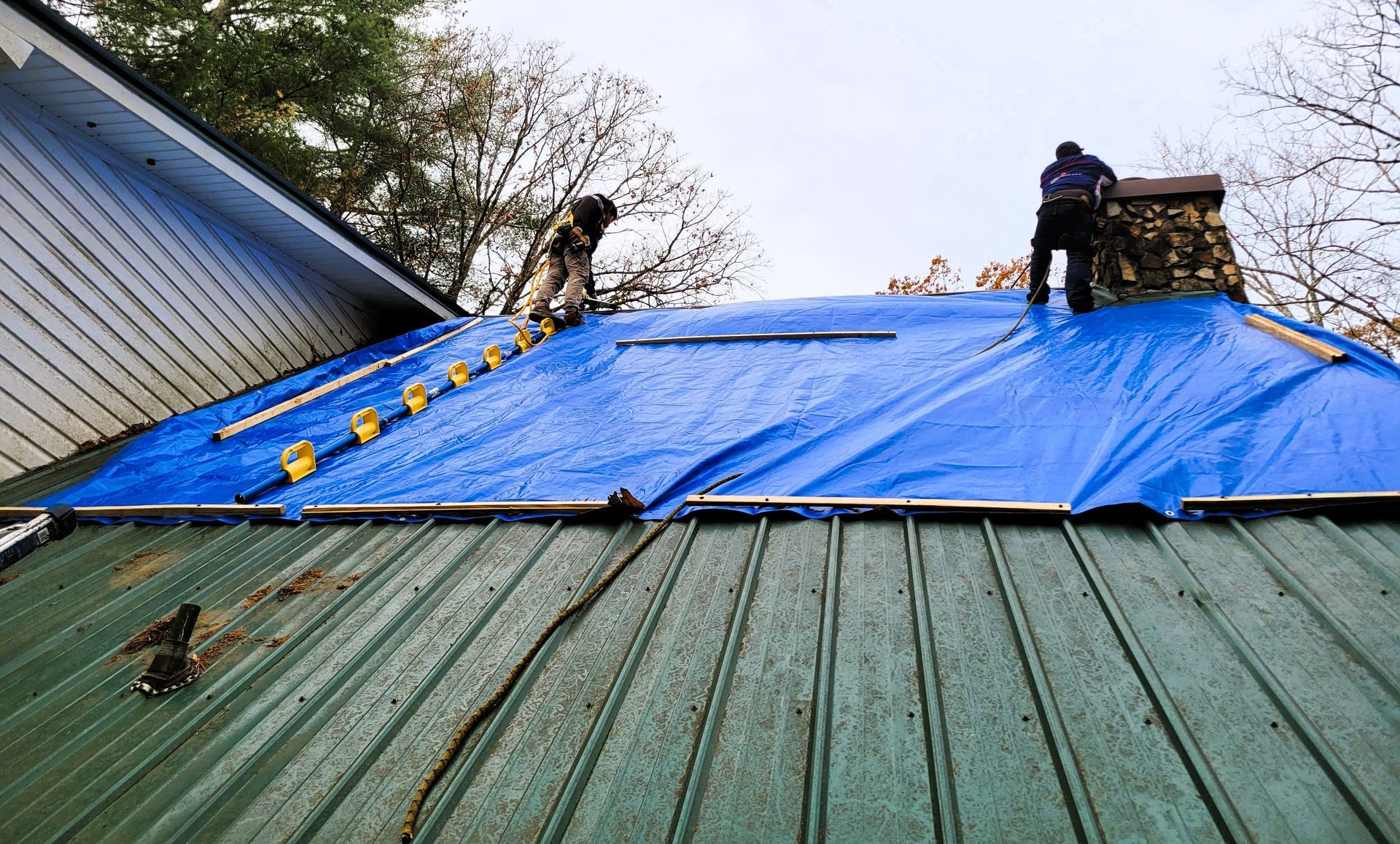
Most policies both require you to prevent further damage and reimburse the cost of doing it. Tarps, plywood, a professional dry-in. Photograph the damage before the tarp goes on so the cover does not hide what it was covering.
-
8. Get documented before you call your insurer
Knowing what the damage is and what it costs turns filing into a decision instead of a guess. Ours is free and the report is yours regardless of what you decide.
-
9. Sign nothing on your porch
Not an assignment of benefits, not a contingency agreement, not "paperwork so we can get up there."
What Wind Damage Actually Looks Like Here
Most of it is invisible from the driveway, which is why so much of it goes unclaimed until it has aged into something a carrier calls wear.
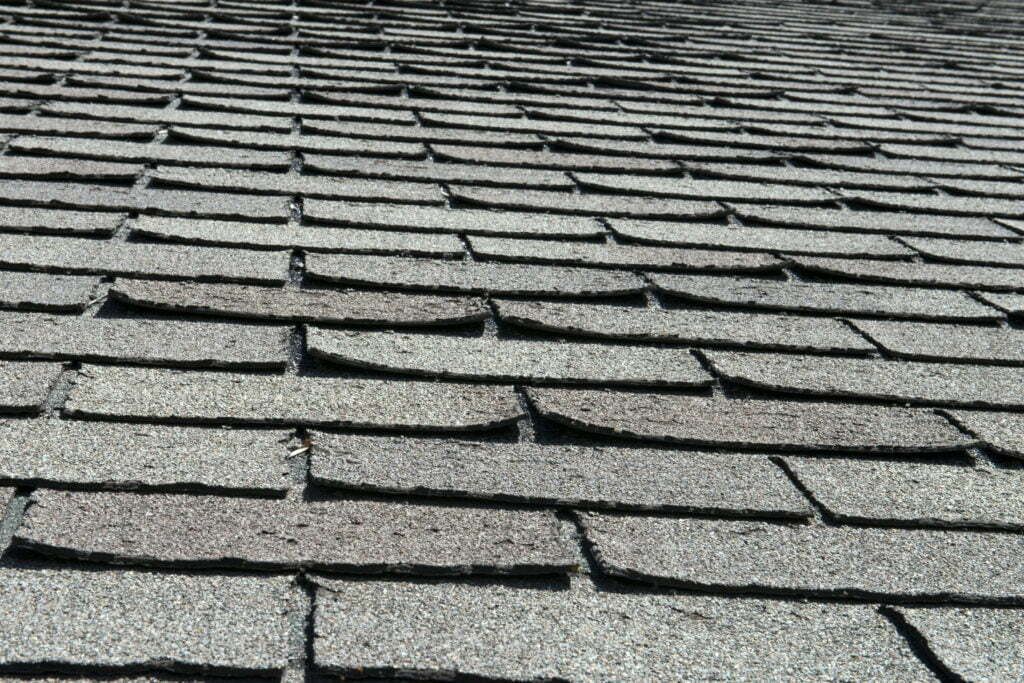
- Creased shingles. A gust lifted the tab past its bend point, fractured the mat, and it settled back down looking untouched. It will never reseal. This is the single most common and most overlooked wind damage in the valley.
- Broken seal bonds. The adhesive let go without the shingle visibly moving. The next storm works it further, and the one after that takes it off entirely.
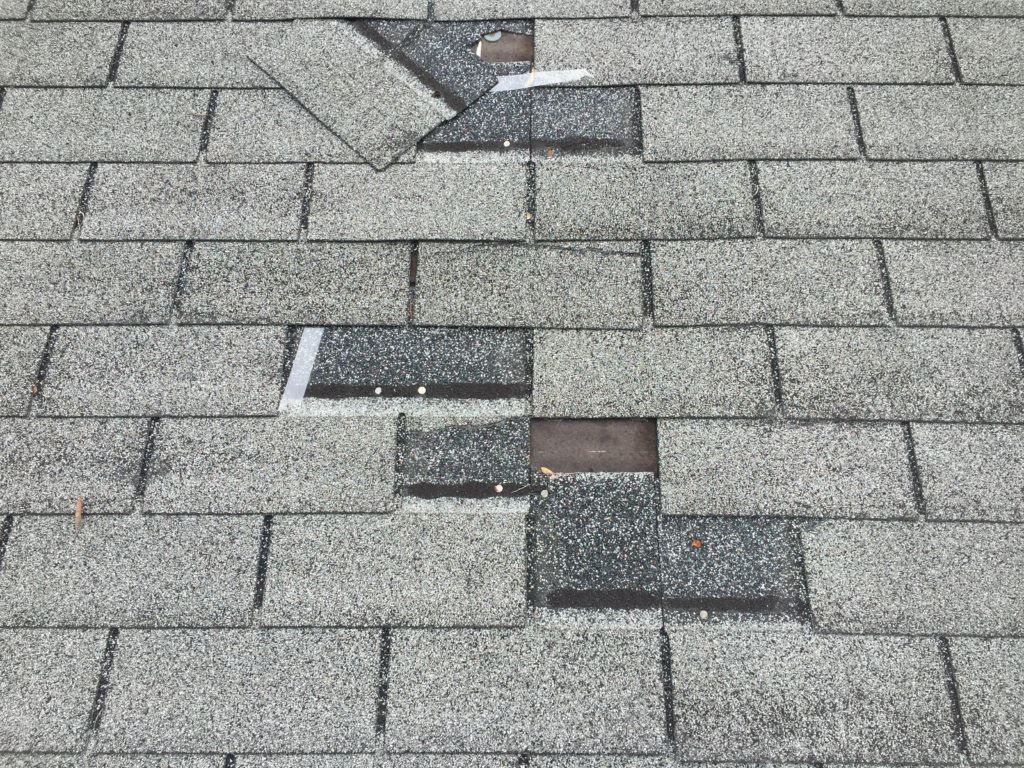
- Missing tabs and full shingles, almost always starting at rake edges, ridges, and the corner of the roof that faces the wind.
- Displaced ridge and hip caps. The most under-fastened part of most roofs and the first thing to go.
- Lifted or bent drip edge, particularly along rake edges on the exposed side of the house.
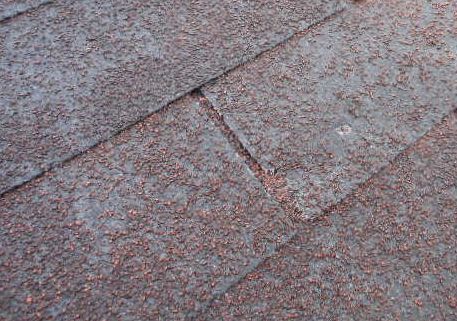
- Concentrated granule loss in patches, from wind-driven grit and debris, which looks different from the even fading of age.
- Damage to soft metals. Dented vent caps, gutters, downspouts, and flashing. Frequently the clearest evidence that an impact event actually occurred.
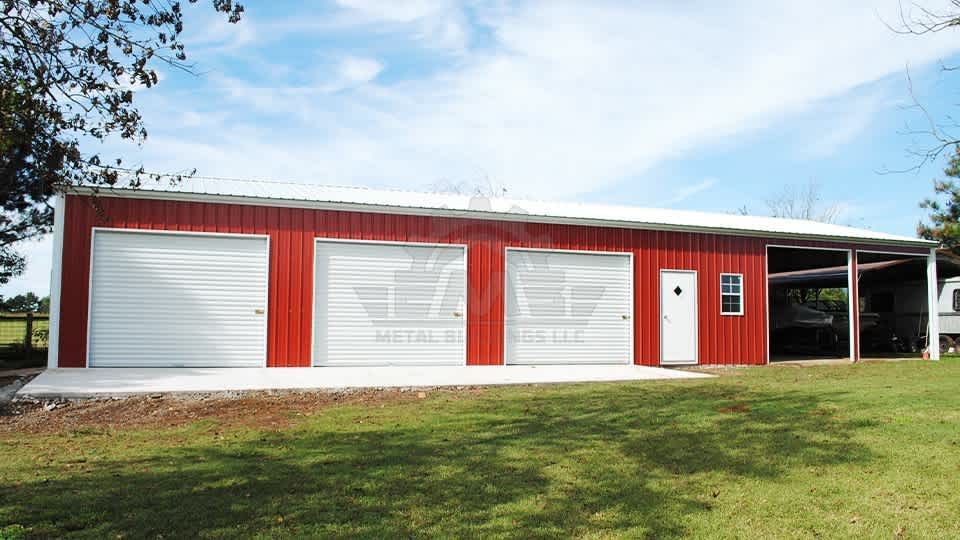
- Metal panel damage on outbuildings. Lifted panels, backed-out fasteners, torn ridge closure, and peeled edge trim on shops and barns.
- Debris impact. In this valley that means anything the wind picked up somewhere else, not just tree limbs.
Granule Loss
Missing Shingles
Lifted Shingles

Hail Damage
Hail leaves a different signature and gets diagnosed differently. That work lives on our hail damage page.
Does Homeowners Insurance Cover Storm Damage?
The general rule is that policies cover sudden events and not gradual deterioration. Wind, hail, and falling objects are typically covered perils. A roof reaching the end of its service life is not, no matter how rough it looks the morning after.
Everything contested happens in between, which is why documentation decides outcomes.
Actual cash value versus replacement cost. An actual cash value policy pays the depreciated value, so an older roof pays out as an older roof. A replacement cost policy pays to replace it, usually in two parts: an initial payment, then the withheld depreciation once the work is finished and invoiced. Which one you hold changes what a claim is worth by thousands of dollars, and it is one line on your declarations page that most people have never read.
Your deductible, and whether you have more than one. This is worth real attention in a market like this one. Some policies carry a separate wind and hail deductible that is calculated as a percentage of the dwelling limit rather than a flat dollar amount, which can make it substantially larger than the deductible you think you have. Read yours, or call your agent and ask specifically whether your wind and hail deductible differs from your standard one.
Roof age and payment schedules. Some carriers apply depreciation schedules or roof surface payment schedules on older roofs, which can change a full replacement into a partial payment. Worth reading before assuming.
Reporting deadlines. Policies carry notice requirements, and waiting a season to report a summer storm invites a denial on the grounds that nobody can now tell which storm did it.
Where we fit. We are your roofer. We are not your adjuster and not your attorney. We document what we find, produce a written scope and estimate an adjuster can work from, meet the adjuster on the roof if you want us there, and tell you directly when we think a claim is not worth filing. If you need someone to represent you against your carrier, that is a licensed public adjuster's role, and a contractor who blurs that line is telling you something.
How Long Does a Roof Insurance Claim Take?
Most claims run somewhere between four and ten weeks from storm to final payment. Knowing the sequence keeps you from worrying at the wrong stage.
1. Reporting, day zero to two. You call your carrier or agent with the storm date and a short description. You get a claim number and an adjuster assignment.
2. Inspection, roughly three to fourteen days. Longer after a widespread event, because carriers pull adjusters across an entire region at once and the queue backs up. After a countywide storm here, expect the longer end.
3. Scope reconciliation, one to three weeks. The adjuster writes a scope, we compare it against what the roof actually requires, and any gap gets submitted as a documented supplement with photographs and measurements. Most homeowners do not know this stage exists, and it is where a real inspection report earns its keep.
4. Approval and first payment. On a replacement cost policy you receive an initial payment with the depreciation held back. Your deductible is your out of pocket, and you pay it to the contractor rather than to the insurer.
5. Scheduling. Weather drives this. After a big summer event the whole county is calling at once, and the work queues accordingly.
6. Completion and final invoice. Work finished, completion photographs taken, final invoice submitted.
7. Withheld depreciation released. On a replacement cost policy the remaining balance comes after the completed work is documented. This is the money homeowners lose when a crew disappears before the paperwork closes.
Storm Damage Services We Offer
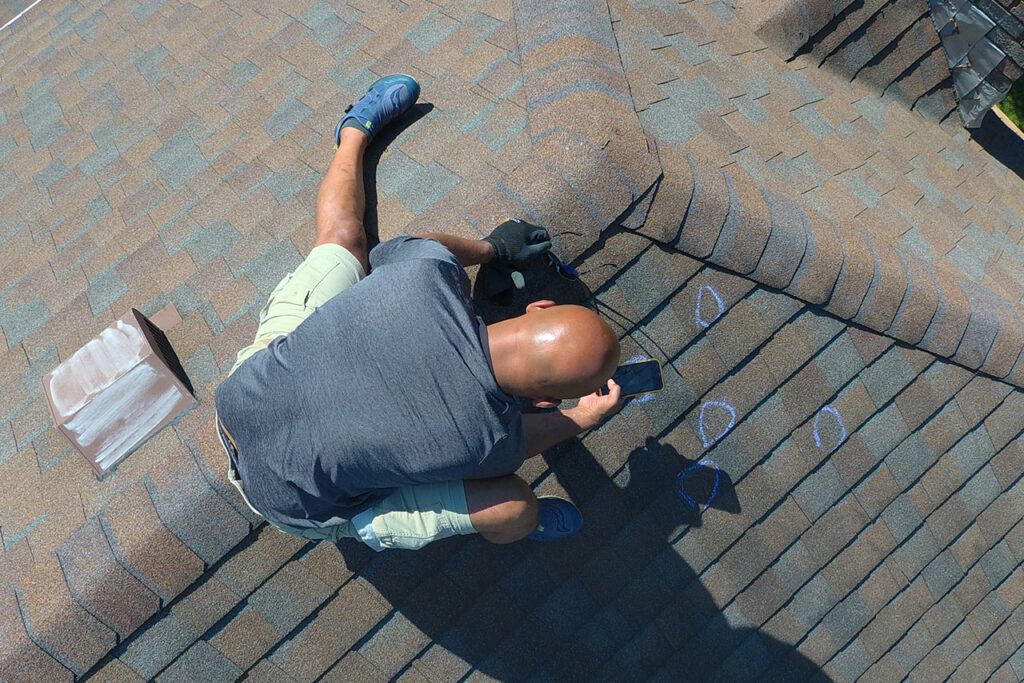
Documented Storm Damage Inspections
Full roof, attic, and outbuilding walk with dated photographs tagged by location, damage mapped by slope and wind direction, and a written summary in plain language. Free, and yours whether you file, hire us, or do nothing at all.
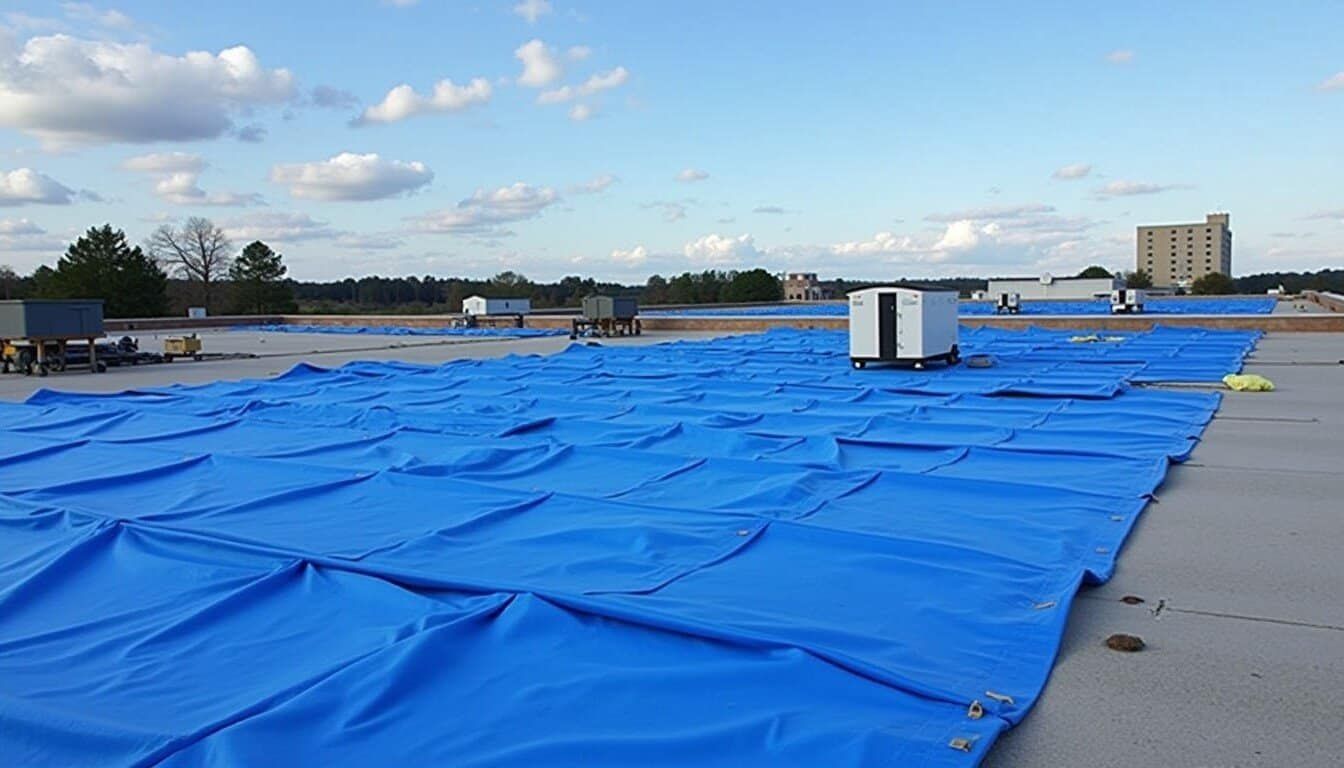
Emergency Tarping and Dry-In
Reinforced poly anchored into sound framing, or peel-and-stick membrane over larger openings. Anchored to survive the next gust, which in this valley is a real design requirement rather than a figure of speech. Emergency pricing applies to the emergency visit only. Urgent right now? See emergency roof repair.

Wind Damage Repair
Creased and lifted shingle replacement, ridge cap rebuild, rake edge and drip edge correction, hand-sealed when it is too cold for the adhesive to bond on its own.




Look Up the Weather Record for Your Storm
Here is something most homeowners never think to do, and it costs nothing.
A claim connects your damage to a specific event on a specific date. You do not have to argue that from memory. The National Weather Service maintains public storm reports and a searchable database of severe weather events, including confirmed wind speeds, hail sizes, and tornado paths, organized by county and date. Local storm reports issued at the time are archived by the responsible forecast office.
If you can pull the record showing that your county recorded 70 mile per hour gusts on the night your shingles came off, you have moved the conversation from your recollection to the government's. Print it and put it in the claim file with your photographs.
We will pull it for you as part of any storm inspection. But it is your record and you can get it yourself.
How to Spot a Storm Chaser
After a confirmed severe weather event in this county, out of area crews arrive within days. Some are competent. The model, though, runs on volume and speed, and they will be somewhere else entirely when a workmanship question comes up next winter.
- They came to you. Local contractors are generally buried after a storm and are not walking neighborhoods looking for work.
- They want a signature today. Especially an assignment of benefits or a contingency agreement that hands them control of your claim. Never sign away insurance rights on a doorstep.
- They tell you the whole roof is covered before anyone has been on it. Your policy and your adjuster decide coverage. A salesperson's confidence is not evidence.
- They offer to absorb your deductible. It gets pitched as a discount. What it means is that the amount billed to your insurer does not match what you actually paid.
- No Utah license, no local address, no local track record. Utah contractor licenses are verifiable through the Utah Division of Professional Licensing and it takes a couple of minutes. Ask for the license number, a physical Utah address, and proof of liability and workers compensation coverage.
- Pressure about a crew leaving town. A roof that made it through the storm will make it through a week of you checking.
What Storm Damage Repairs Cost in Tooele
Typical Tooele County market ranges; estimates only. With an approved claim, your out of pocket is usually your deductible rather than these figures, which is why the deductible conversation happens before you file.
If a claim is involved, your out-of-pocket is usually your deductible rather than these numbers, which is exactly why the deductible math conversation happens before you file and not after.
Get your damage documented →
Wind doesn't stop at the house. Make sure the inspection doesn't either.
Our Storm Damage Process
01
Stabilize, then document
If water is coming in, stabilization happens first and gets photographed. Then the full inspection with dated images organized by slope, plus every outbuilding on the property.
02
The Number, in Writing
We separate event damage from ordinary wear on paper, run the deductible math with you, and tell you plainly whether we would file this one if it were our house.
03
Your Decision, Supported
File or pay out of pocket. Either way you get the same scope and the same estimate. If you file, we will meet the adjuster on the roof and supply supplement documentation when the initial scope comes up short.
04
Repair and Close the File
Work completed, completion photographs delivered, documentation archived so your next conversation with an insurer or a buyer starts from evidence rather than memory.
Why Call Tooele Roofing Co After a Storm
We will tell you not to file
A claim at or below your deductible costs you money and sits on your record. That advice loses us work occasionally and earns the referrals that more than cover it.
We walk the whole property
House, shop, barn, shed, detached garage. Damage on outbuildings is the most commonly missed item in this county.
Documentation built for a claim file
Dated, location-tagged photographs and itemized scopes an adjuster can work from, not a one-line total that starts an argument.
We are on this side of the Oquirrhs and we stay here
A warranty is worth exactly as much as the company behind it, and ours has a Tooele County address in February.
Storm & Wind Damage FAQs
Get It on the Record Before the Trail Goes Cold
The connection between your damage and the storm that caused it is easiest to prove right now. Free inspection, dated photographs, every structure on the property, and a clear answer about whether filing makes sense.
Or Call: 385-527-3313