
Roofing in Lake Point, Utah
Lake Point sits at the top of Tooele Valley, at the junction of I-80 and SR-36, in the gap between the northwest end of the Oquirrh Mountains and the open ground running out to the Great Salt Lake. Geographically it is a doorway, and wind treats it like one. Air moving between the valley and the lake basin funnels through this corner, and there is nothing in the way of it.
People have been noticing this spot for a long time. Adobe Rock, the outcrop at the northwest point of the Oquirrhs, was a pioneer landmark and rendezvous. The Donner party camped near it in 1846, and the settlement here was originally called E.T. City after Ezra T. Benson. What has not changed in all that time is the wind.
Tooele Roofing Co roofs Lake Point and Mills Junction, and we spec for the exposure rather than the catalog. Free inspection, photographs of what we find, and particular attention paid to the edges, because that is where a roof in this corner of the valley gives up.
Get Your Free Lake Point Roof Inspection
The Most Exposed Roofs in Tooele Valley
Wind builds over distance and loses energy to obstruction. Lake Point offers it distance and almost no obstruction. Open ground to the north and west, a mountain range funneling flow to the east, and an interstate corridor running straight through the gap.
The August 2026 storms named Lake Point among the affected communities. The National Weather Service confirmed an EF-1 tornado in the county that month and a supercell producing gusts over 90 miles per hour, with warnings citing measured gusts of 70 miles per hour and hail at two inches.
Where the damage actually starts. Not in the middle of the roof. Wind accelerating over a roof surface generates lift, and that lift concentrates at the perimeter and reaches its maximum at the corners. So the sequence is almost always the same: a rake edge at a gable end lifts, or a ridge cap goes, and then each following gust has something to grab. By the time a homeowner notices, the failure has been progressing for a while.
What we do about it. The perimeter gets treated as the actual product. Six-nail fastening as standard rather than the four-nail minimum, factory starter strip with its adhesive line at the rakes as well as the eaves, ridge and hip caps fastened for uplift, and drip edge properly secured everywhere. On metal roofs it means tighter clip spacing at perimeters and corners than in the field, and hemmed edges rather than face-fastened trim.
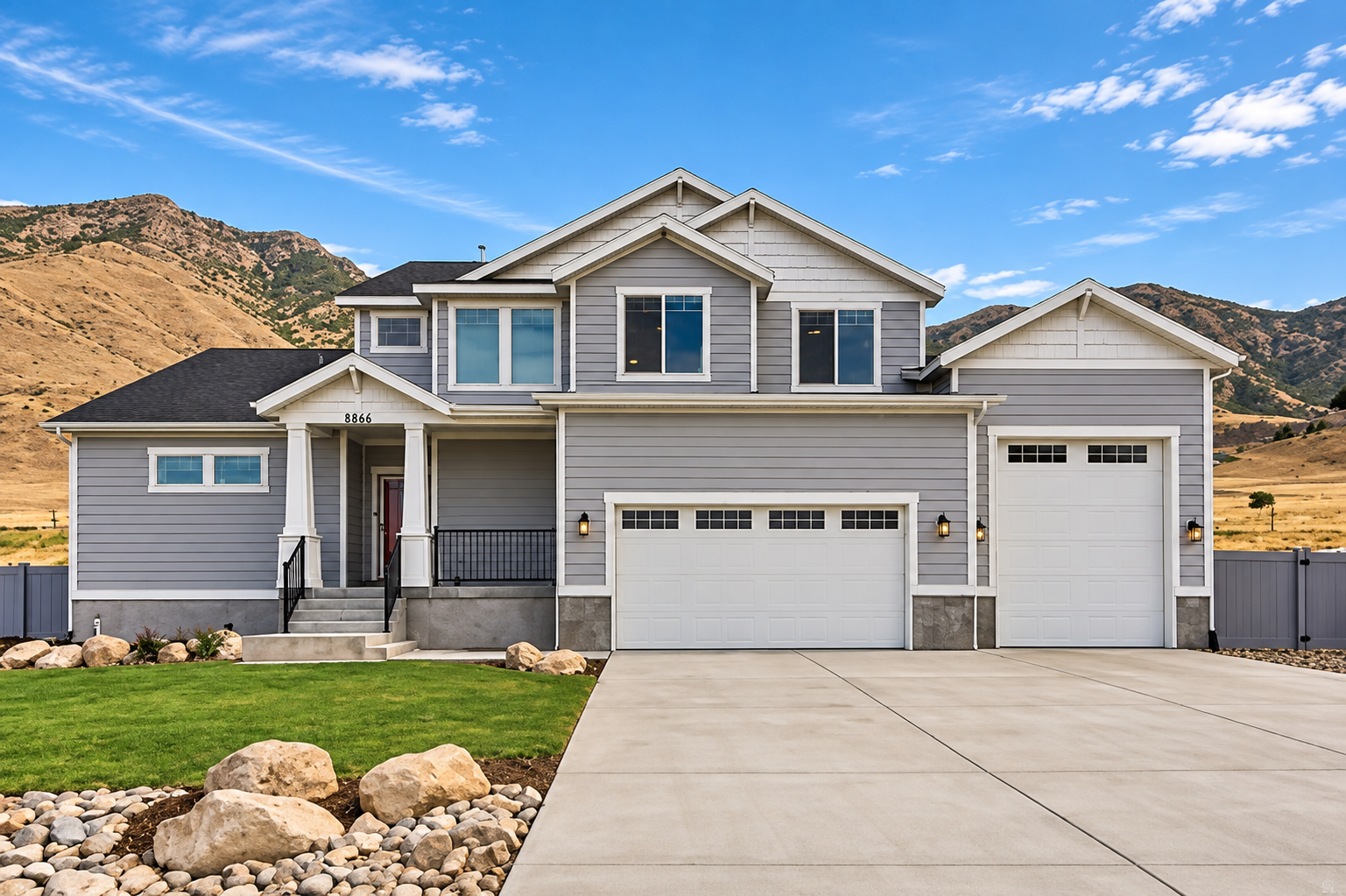
The Damage You Will Not See From the Driveway
This is worth reading if you live here, because it explains why Lake Point roofs age faster than their warranties suggest.
Every asphalt shingle relies on a strip of adhesive that bonds it to the course below. That bond is what turns a stack of individual tabs into a continuous surface. Every strong gust flexes it slightly, and enough repetitions break it down. A roof in this corner of the valley accumulates those cycles considerably faster than one four miles inland.
Two consequences follow. First, roofs here often reach the end of their service life with plenty of granule still on them, because what failed was the seal rather than the shingle. Second, the most common wind damage here is invisible from the ground. A gust lifts a tab past its bend point, fractures the mat, and the shingle settles back down looking entirely normal. The crease is a faint horizontal line you can only see up close, and that shingle will never seal again.
Which is why the honest advice for Lake Point is to have the roof looked at after significant wind events even when nothing appears wrong, and to get a dated inspection on file before storm season rather than only after it.
What Lake Point Roofs Are Up Against
The highest wind exposure in the valley, at the gap where the valley opens toward the Great Salt Lake.
Perimeter and corner uplift, which is where every wind failure begins.
Seal strip fatigue, running faster here than anywhere else in Tooele County.
Creased shingles that look completely normal from the ground and have permanently lost their bond.
Hail, documented at two inches in the county in August 2026.
Drifting snow, relocated by the same wind into deep pockets behind ridges and dormers.
Wind-driven snow at metal roof closures, which produces leaks in roofs that have no holes in them.
Roofing Services in Providence
List of Services
-
Storm & Wind damageList Item 2
Documented inspections after wind events, with dated photographs and a clear answer on claimable damage versus ordinary wear.
-
Roof RepairList Item 1
Rake edge rebuilds, ridge cap replacement, and creased shingle repair, which together make up most of what we do here.
-
Roof Replacement
Tear-offs specified for this exposure: high-wind fastening, sealed starter at the rakes, and per-sheet decking pricing.
-
Emergency Roof Repair
Wind-anchored tarping that holds through the next gust, which in this corner is a real design requirement.
-
Roof InspectionList Item 4
Free, photographed, and yours to keep, including the pre-storm baseline report that protects your position if you ever file a claim.
Lake Point Roofing Questions
Southwest across the valley: Grantsville, where a pioneer grid and a wave of post-2000 subdivisions need two different conversations.
Built for the Windiest Corner of the Valley
Free inspection, photographs you keep, and a specification written for where you actually live.
Or Call: 385-527-3313