Asphalt Shingle Roofing in Tooele, Utah
Look at a bundle of architectural shingles and you will find a wind rating printed on the wrapper, usually a number high enough that wind should never be a concern in this valley. That number is real, and it is also conditional. It applies only when the shingle is fastened with the pattern the manufacturer specifies for that rating, nailed in the correct zone on the shingle, set on a proper starter course, and given the chance to seal. Miss any one of those and the number on the wrapper describes a roof you do not have.
That gap is the reason roofs come apart here. Tooele Roofing Co installs shingles as complete systems, meaning the six-nail high-wind pattern rather than the four-nail minimum, factory starter strip at eaves and rakes, matching ridge caps, and hand-sealing when it is too cold for the adhesive to bond on its own. Every install starts with a free photographed inspection, and every estimate names the specification in writing so you can hold us to it.
Get Your Free Shingle Roof Inspection
The Wind Rating Is a Claim About the Installation
This is the most useful thing on this page, so it goes first.
Shingle wind resistance is measured under industry test standards, and the top classifications correspond to very high wind speeds. Asphalt shingle wind resistance classifications are determined by two primary industry tests: ASTM D3161 (a fan-induced wind test) and ASTM D7158 (an uplift force test)
ASTM D3161 (Fan-Induced Wind Test)
ASTM D3161 (Fan-Induced Wind Test) tests how well a shingle resists lifting when subjected to continuous fan-driven air streams for two hours:
- Class A: Tested up to 60 mph
- Class D: Tested up to 90 mph
- Class F: Tested up to 110 mph (The highest classification under this standard)
ASTM D7158 (Uplift Force / Resistance Test) measures the literal mechanical uplift force required to break a shingle's factory-applied sealant bond. It calculates performance against standard design wind speeds (with basic values correlating to older nominal speeds, and newer calculations adapting to ultimate wind speed maps up to 194 mph):
- Class D: Certified for basic wind speeds up to 90 mph (or ultimate gusts up to 116 mph)
- Class G: Certified for basic wind speeds up to 120 mph (or ultimate gusts up to 155 mph)
- Class H: Certified for basic wind speeds up to 150 mph (or ultimate gusts up to 194 mph) (The highest classification under this standard)
What almost nobody explains is what those tests assume:
That the adhesive has sealed
Every asphalt shingle carries a strip of adhesive that bonds it to the course below. That bond is what makes a roof a continuous surface instead of a stack of loose tabs. It activates with warmth. A roof installed in cold weather without hand-sealing may go into its first windy spring having never bonded at all, and it will behave like a roof with no wind rating whatsoever.
That the nails are in the nailing zone
Manufacturers print a narrow band across the shingle where fasteners belong. A nail placed too high misses the laminate layer and lets the shingle slide. A nail driven too deep cuts through the mat. Both are invisible from the ground on install day and both show up years later.
That the fastening pattern matches the rating
The higher wind rating requires more fasteners per shingle than the standard minimum. This costs very little at install time and it is the most commonly skipped item in the trade.
That the perimeter is right
The field of a roof rarely fails first. Wind gets under an edge and works inward, which makes the starter course at the rakes and eaves more important than anything happening in the middle of the slope.
So when someone tells you a shingle is rated for high wind, the accurate response is that it can be. Ask what makes it so on your roof.
Shingle Roofing Services We Offer

Full Shingle Roof Replacement & Installation
Tear-off to the deck, decking inspected sheet by sheet, high-wind fastening, sealed starter at the perimeter, new flashing, and corrected ventilation. Class 4 upgrades at replacement. Quoted alongside the standard option so you can see the real difference. Full scope on our roof replacement page.

Shingle Repair
Creased, lifted, and missing shingles replaced and color matched, hand-sealed when temperatures require it. A creased shingle does not get glued back down. It gets replaced.

Ridge Cap and Perimeter Rebuilds
The two places wind actually wins, repaired properly rather than patched.
Choosing a Shingle for This Valley
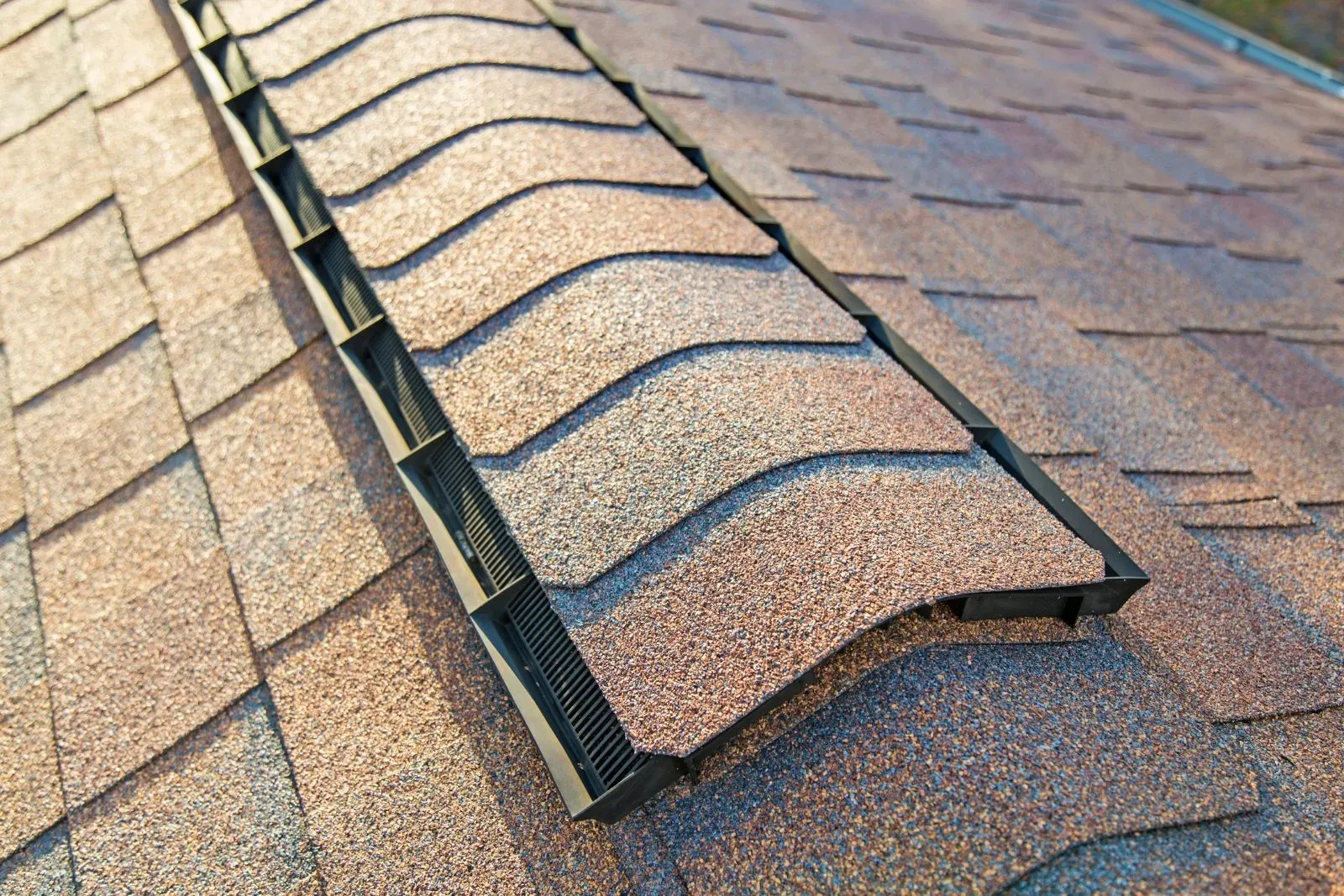
- Architectural laminate shingles. The default and generally the right answer. These are multi-layer shingles with meaningfully better wind performance than the older single-layer products. The lines you will see most often on Utah bids come from GAF, Owens Corning, CertainTeed, and IKO, and any of them performs well when installed as a complete system with that manufacturer's own starter strip, ridge cap, and specified nailing pattern. That system requirement is where a lot of installations quietly fall short, and it is worth understanding before you compare bids. Manufacturers write their wind warranties around their own components used together. A roof that pairs one brand's shingles with a cheaper starter strip, a different brand's ridge cap, or field shingles cut up to serve as starter is not the assembly the warranty describes, and the coverage can be reduced or void as a result. Ask any bidder which manufacturer's starter and cap product they are quoting, not just which shingle.
- Class 4 impact-resistant shingles. These use modified asphalt or added reinforcement so the shingle absorbs a hail strike instead of fracturing, and Class 4 is the highest rating in the impact standard. In a county that recorded two inch hail last August, this is a live question rather than an upsell. The material costs more and many carriers discount premiums for it, which often decides the answer. The full breakdown of whether it pays for you is on our hail damage page.
- Polymer-modified shingles. Rubberized asphalt stays flexible across temperature swings and resists cracking as it ages. Malarkey is the line most associated with this construction in the western states, and several other manufacturers now offer polymer-modified products as well. Most of these lines also carry the Class 4 rating, so in a hail county they frequently answer two questions at once. Worth pricing if you plan to keep the house a long time.
- What we steer people away from. Older single-layer three-tab shingles, which most manufacturers have discontinued or are phasing out, and any bargain line with no high-wind application rating. In a valley that has recorded gusts above 90 miles per hour, saving a few hundred dollars on the product that is supposed to stay attached is a poor trade.
One thing that matters less than people expect: color. Ventilation and product class outweigh shingle color by a wide margin. Pick what suits the house and your HOA, and put the decision energy into the specification.
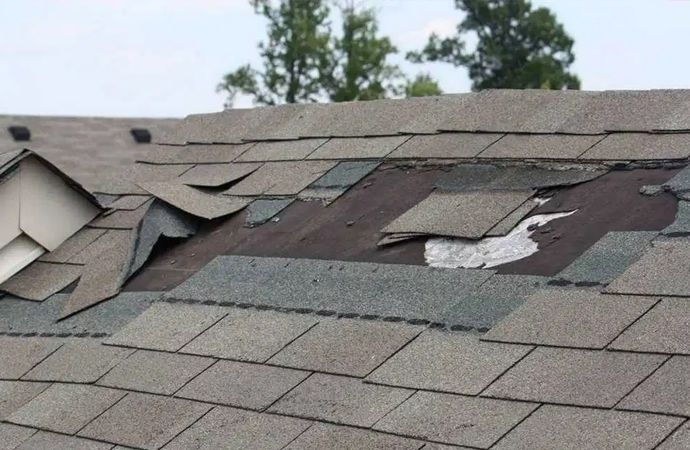
Why Shingle Roofs Fail Early Here
Seal Strip Fatigue
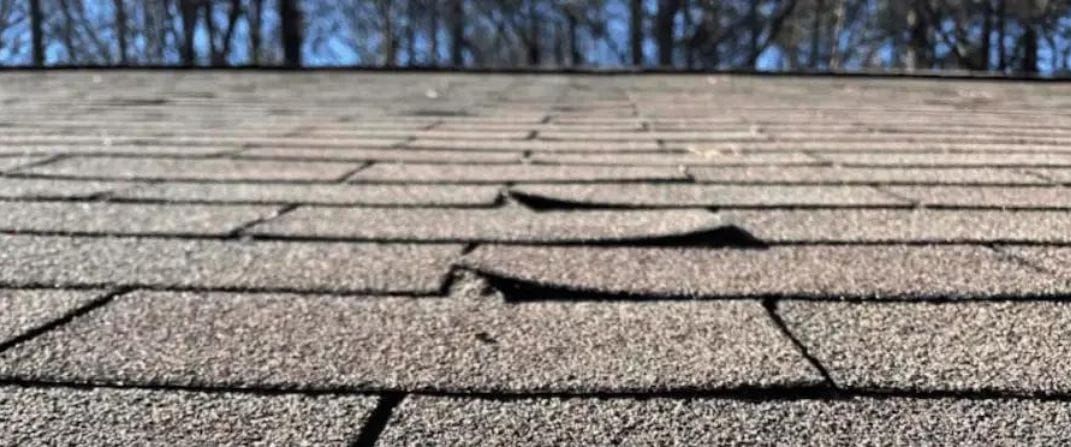
Every gust flexes the adhesive bond a little. Enough cycles and the bond breaks down while the shingle still looks new. This is the dominant failure mode in Tooele Valley and it produces roofs that reach the end of their life with plenty of granule left.
Creasing that Never gets Caught
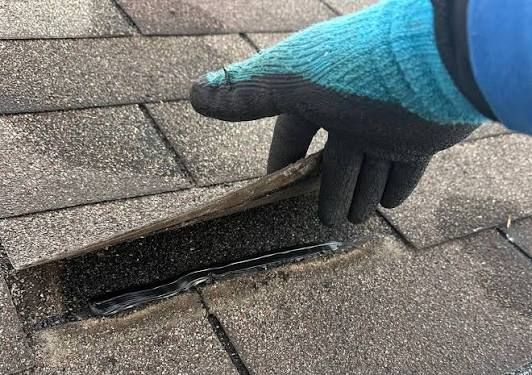
A gust lifts a tab past its bend point, fractures the mat, and the shingle lays back flat looking untouched. It is no longer sealed and it never will be again.

Perimeter Failure
Rake edges, eaves, and ridge caps go first. A roof is only as wind-resistant as its edges, and the edges are the cheapest place to cut corners.
Roofs that Never Sealed
Installed cold, never hand-sealed, and the adhesive never activated. These fail during the first real spring wind and the homeowner assumes the storm was exceptional.

Hail Bruising Working Quietly
Crushed granules and a fractured mat do not leak. They shorten the roof's life by years, and the damage frequently goes undocumented until the reporting window has closed.

How to Compare Shingle Bids
The shingle itself is maybe half of what decides how long the roof lasts. The rest is a list of details that never appear in a photograph, cost a few hundred dollars combined, and separate a roof that reaches its warranty from one that does not. Use this against every bid you are holding, ours included.
- Factory starter strip at eaves and rakes, not cut-up field shingles. The starter is what the first course bonds to, and its adhesive line is positioned deliberately. Cutting up field shingles to fake a starter is faster and cheaper and voids most wind warranties. It is the most common corner cut there is, and in a wind valley it is the one that matters most.
- Six nails per shingle, in the nailing zone, driven flush. Ask for the number. A bidder who cannot answer immediately is not thinking about wind.
- Factory hip and ridge caps. Cut-up shingles used as caps crack early and hold fasteners poorly. Matching cap product is engineered for the bend and the exposure.
- Drip edge at eaves and rakes. Code requires it and it still gets skipped. It is the cheapest edge protection available.
- Ice and water shield at eaves and every valley, with high-temperature synthetic underlayment over the rest of the deck, fastened at the spacing its manufacturer specifies for wind.
- New step flashing and kickout flashing at every wall transition. Reused step flashing is a leak on a delay. A missing kickout soaks the wall sheathing behind your siding or stucco.
- Hand-sealing if the install happens in cold weather. Ask directly. If a bidder says the shingles will seal themselves in the spring, understand that the roof is unsealed until then, and spring is when the wind arrives.
- Balanced ventilation with baffles, because a roof over a poorly ventilated attic ages faster no matter what went on top of it.
Three questions for every bid. Factory starter at the rakes, or cut field shingles? How many nails per shingle? If you install this in cold weather, do you hand-seal? A roofer who answers those quickly and specifically is worth paying. A bid that comes in several thousand dollars under the others is usually under in exactly these lines, and every one of them is invisible the day the crew drives away.
What Shingle Roofing Costs in Tooele
Typical Tooele County market ranges; estimates only. Your exact number comes from a free inspection, and every estimate is line-item.
Every estimate is line-item, so the specification items above appear as things you can see and compare rather than being folded into one number.
"A wind rating is a promise about how the roof gets nailed. Ask any bid to show you that line."
Our Process
01
Free Inspection
Roof and attic, photographed, with real attention paid to seal condition at the edges, because that is where this valley's roofs tell you their age. About an hour.
02
The Number, in Writing
Line-item estimate within 24 to 48 hours, with two or three product tiers priced out rather than only the one we would prefer to sell.
03
The Work
Full-system installation to the manufacturer's high-wind specification, hand-sealing in cold weather, same-day dry-in, nightly cleanup and magnet sweep.
04
Walkthrough & Warranty
Completion photographs including the perimeter and fastening details you cannot see from the ground, manufacturer warranty registered, workmanship warranty in writing.
Why Choose Tooele Roofing Co for Shingle Work
We install to the rating, and we photograph it
High wind ratings require specific components and patterns. We install to that specification and document it, which is what makes a warranty real instead of theoretical.
The specification appears on the estimate
Fastening pattern, starter product, cap product, underlayment, and membrane coverage are line items, not "contractor's choice." That makes our bid comparable and makes a cheap bid legible for what it is.
We hand-seal in cold weather as standard
Not as an extra, and not as something we mention afterward.
Shingle Roofing FAQs
Get the Rating You Are Paying For
The number on the wrapper is a promise about the installation. Free inspection, a written specification, and a roof built to earn it.
Or Call: 385-527-3313


